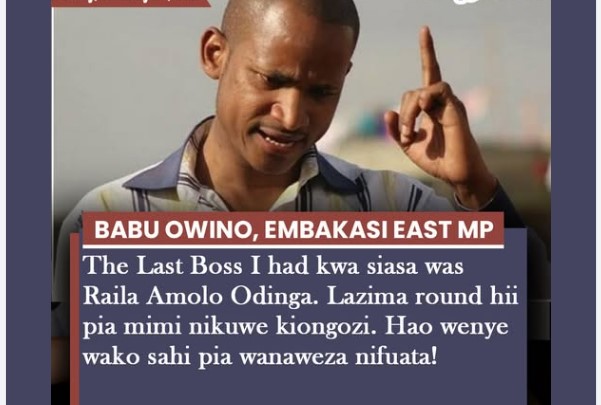
In the dynamic world of Kenyan politics, mentorship and succession often play pivotal roles in shaping the trajectories of emerging leaders. Babu Owino’s statement, “The last boss I had kwa siasa was Raila Amolo Odinga. Lazima round hii pia mimi nikuwe kiongozi. Hao wenye wako sahi pia wanaweza nifuata!”, captures this essence perfectly, reflecting both respect for political mentors and the ambition to chart one’s own course.
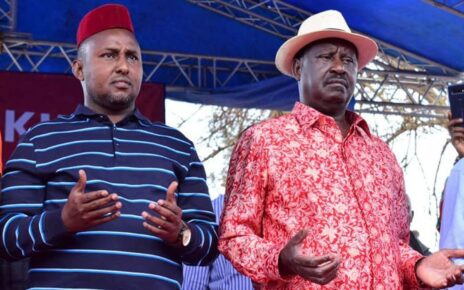
By acknowledging Raila Odinga as his “last boss,” Babu Owino situates himself within a lineage of political leadership. Odinga, a veteran figure in Kenya’s political landscape, represents experience, influence, and a formidable network—qualities that many young politicians aspire to learn from. This acknowledgment is not only a nod to mentorship but also a strategic move to align himself with Odinga’s legacy, signaling to the public that he has been molded by one of the country’s most respected leaders.
Yet, Owino’s declaration goes beyond homage. When he asserts that he must now become the leader himself, he is communicating ambition, independence, and readiness to assume responsibility. The statement “Lazima round hii pia mimi nikuwe kiongozi” conveys a sense of inevitability and determination. It reflects the natural progression of political growth: from learning under a seasoned leader to stepping forward as a principal figure in one’s own right.
Moreover, Owino’s call to action—“Hao wenye wako sahi pia wanaweza nifuata”—signals inclusivity and influence. By inviting serious-minded individuals to follow him, he positions himself as a unifying force capable of rallying supporters around a shared vision. This strategy not only consolidates his base but also challenges peers and potential allies to recognize his emerging leadership.
Babu Owino’s words encapsulate the delicate balance between respect for one’s mentors and the pursuit of personal political ambition. They highlight a trajectory that is both aspirational and grounded, signaling a transition from protégéship to leadership. In a broader context, such statements resonate with young politicians across Kenya, demonstrating that learning from predecessors is not a limitation but a foundation for future leadership.
In essence, Owino’s declaration is a blueprint of political evolution—honoring the past while boldly claiming the future. It is a reminder that in politics, mentorship, ambition, and the ability to inspire followers are inseparable elements of effective leadership.