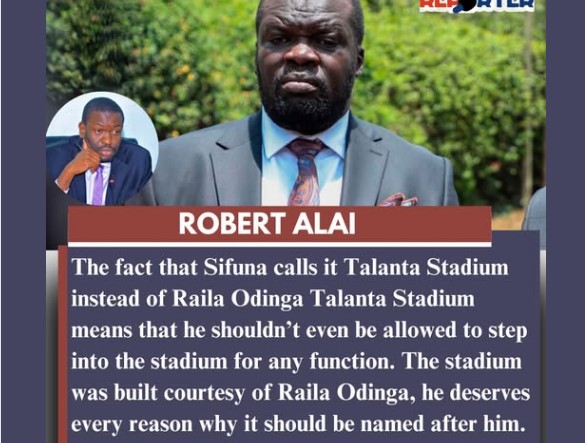
The statement by Robert Alai criticizing Edwin Sifuna over the naming of Talanta Stadium reflects the ongoing political tensions and personality-driven debates within Kenya’s political space.
Alai argues that the stadium should be referred to as “Raila Odinga Talanta Stadium,” crediting Raila Odinga for its development. His remarks suggest that leaders and the public should acknowledge individuals who play a key role in major national projects by naming such facilities after them. This perspective is common in politics, where infrastructure is sometimes used to cement legacies.
However, the issue also raises a broader debate about how public projects should be named. On one hand, naming infrastructure after prominent leaders can be seen as recognition of their contribution to national development. On the other hand, critics argue that publicly funded projects should retain neutral names to reflect that they belong to all citizens, not any single individual.
Edwin Sifuna referring to it simply as Talanta Stadium may reflect adherence to its official or commonly used name, rather than a deliberate attempt to dismiss anyone’s contribution. In many cases, the official naming of national facilities follows formal government processes rather than personal preferences.
Alai’s strong stance also highlights the deep political loyalties that shape public discourse in Kenya. Supporters often defend their leaders passionately, sometimes turning even small issues—like naming—into larger political statements.
This debate goes beyond just a name; it touches on recognition, legacy, and how a country chooses to honor its leaders while balancing national unity.